Ancient Wisdom
Ancient Wisdom, Modern Burnout: What Ayurveda, Chinese Medicine, and Eastern Philosophy Know About Healing That We Forgot
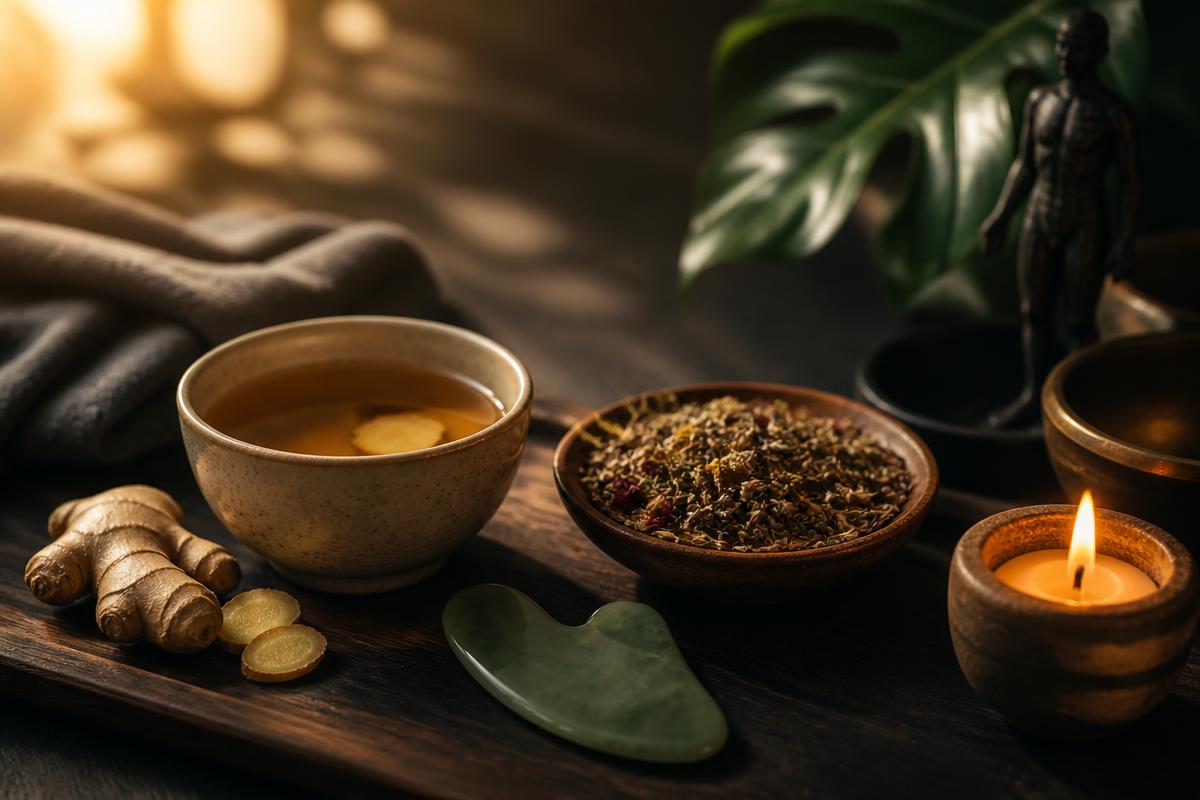
Here's an uncomfortable thought: thousands of years before lab tests existed, healers were successfully treating the exact problems filling modern clinics — exhaustion, digestive trouble, anxiety, poor sleep. They didn't have bloodwork. They had something we've largely lost: deep observation of how the body actually works.
As an Integrative Health Practitioner, three of the seven disciplines I practice come from this ancient lineage. Here's what each one still gets profoundly right.
Ayurveda: You Are Not Everyone Else
Ayurveda — India's 5,000-year-old healing science — starts from a premise modern wellness culture is only now rediscovering: there is no one-size-fits-all protocol. Every person has a unique constitution (in Ayurvedic terms, a balance of three doshas), which shapes how you digest, sleep, gain weight, and respond to stress.
This is why your coworker thrives on a raw vegan diet while it leaves you bloated and freezing. Neither of you is wrong. You're different constitutions.
Ayurveda's most practical gift is the daily rhythm — dinacharya. Waking at a consistent time, tongue scraping, warm water before caffeine, morning sunlight, eating your largest meal midday. These aren't rituals for their own sake; they synchronize your body's internal clocks, and modern circadian science keeps validating them.
Chinese Medicine: The Body Speaks in Patterns
Traditional Chinese Medicine sees health as the smooth flow of vital energy — Qi — and reads the body like a map. The coating on your tongue, the quality of your pulse, even the hour you habitually wake at night are all information.
That 3am wake-up you keep having? TCM linked that window to the liver system — stress, frustration, overload — centuries before we could measure the cortisol and blood sugar mechanics behind night waking.
TCM's most immediately useful teaching is about digestion: your gut works best with warmth. Warm, cooked meals; ginger tea instead of iced drinks; soups and stews over cold salads when your digestion is struggling. If you deal with chronic bloating, this single shift is often a revelation.
Eastern Philosophy: The Mind Runs the Machine
The third ancient discipline isn't about food or herbs at all. Buddhist, Taoist, and yogic traditions understood that the state of your mind sets the state of your body — and modern neuroscience agrees. Rumination and constant stimulation hold your nervous system in fight-or-flight. In that state, digestion slows, sleep degrades, and repair goes on hold.
Their tools — meditation, breathwork, presence — are nervous system technology. A slow exhale literally activates your parasympathetic ("rest and digest") state. Five minutes of breath-focused sitting is a rep for the brain circuits that regulate stress.
You cannot supplement your way out of a dysregulated nervous system. The ancients knew it. Now we can measure it.
Ancient Tools, Modern Testing
Here's where it gets exciting: we no longer have to choose between ancient wisdom and modern science. In my practice, at-home lab testing shows us exactly what's happening in your body — and these time-tested practices become part of the personalized protocol that fixes it.
Ancient wisdom. Modern science. Real results. If you're ready to stop guessing and start healing, book a call — let's get to work.