St. George
Why St. George, Utah Might Be the Healthiest Place You're Not Fully Using
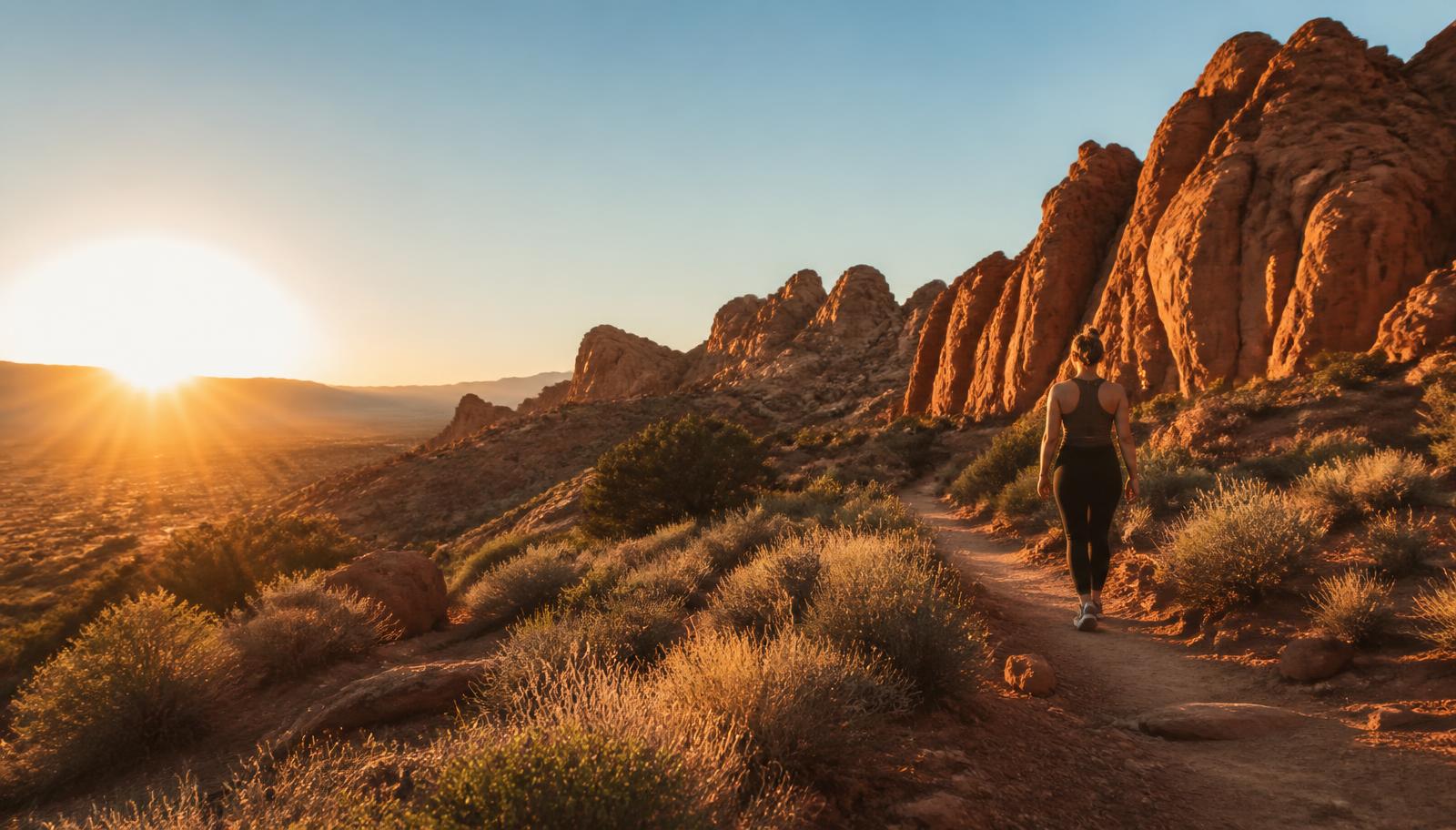
If you live in St. George, you're sitting on a health advantage most people pay thousands of dollars in wellness retreats to chase: sunlight. St. George averages roughly 255 sunny days a year — well above the national average of about 205 — with low humidity, mild winters, and some of the clearest skies in the country.
Most of us treat that as a lifestyle perk. As an Integrative Health Practitioner, I see it as medicine most residents aren't fully cashing in on.
Sunlight Is Not Optional for Your Hormones
Morning sunlight hitting your eyes does something a supplement can't replicate: it sets your circadian rhythm, the internal clock that governs your sleep hormone (melatonin), your stress hormone (cortisol), and dozens of downstream processes tied to energy and mood. Get that signal early and consistently, and your body knows when to be alert and when to wind down. Miss it — because you're indoors under artificial light before your commute — and that rhythm drifts, taking your sleep and energy with it.
Living somewhere with 255+ clear days a year removes the biggest excuse: bad weather. The sun is out. The only missing piece is stepping into it.
Vitamin D Without the Pill
St. George's near-constant sunshine also makes it one of the easiest places in the country to maintain healthy vitamin D levels through sun exposure alone — 10 to 20 minutes of midday skin exposure, a few times a week, is often enough for a lot of people (skin tone, age, and season all matter, which is exactly why testing your actual level beats guessing).
Vitamin D isn't just a "bone vitamin." It's involved in immune function, mood regulation, and inflammation control — three things directly tied to the fatigue, low mood, and getting-sick-often patterns I see constantly in my practice.
The Desert Climate Advantage for Movement
Low humidity and mild winters mean outdoor movement is realistic here almost every day of the year — not just a few warm months. That matters because movement outdoors stacks two benefits at once: the metabolic and mitochondrial benefits of exercise, plus the circadian and vitamin D benefits of daylight. Two health wins from one 30-minute walk.
How to Actually Use Your Location
Get outside within an hour of waking — even 10 minutes, no sunglasses, facing the sky (not the sun directly).
Move your workout outdoors at least 2–3 times a week — the trails and terrain here are unmatched (more on that in an upcoming post).
Take meetings or calls walking outside when you can — desert mornings and evenings here are built for it.
Get your vitamin D tested, don't assume — sun exposure habits, skin tone, and sunscreen use all change your actual levels.
St. George gave you the raw material. The rest is habit.
Living somewhere this sunny is a gift most people underuse. If you want to know exactly where your vitamin D, energy, and hormone levels actually stand, book a call — let's get to work.